 Reviews


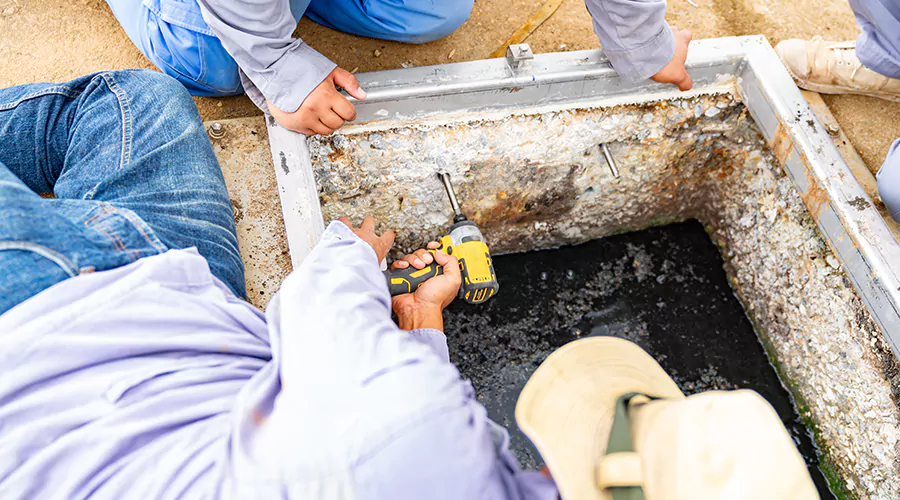
You clean a grease trap by scooping out the fat layer once it fills 25% of the trap's depth. Professional grease trap cleaning costs $150 to $500 depending on trap size and location. A small under-sink unit is a 30-minute DIY job.
Skipping it costs far more than doing it. Non-compliance can bring fines and business closures plus liability for sewer damage.
The job is simple and unglamorous. Here's the full process along with the schedule rules that inspectors actually check.
What a Grease Trap Does?
A grease trap separates fats from wastewater using nothing but physics. Kitchen water enters one side and slows down inside the tank. Fats and oils float to the top while food solids sink. Cleaner water exits through a baffle in the middle.
- The chemistry explains the mission: Fog solidifies as it cools and coats the inside of drain pipes. That coating builds the clogs and backups that close kitchens. The trap catches the grease before the pipes ever see it.
- Capacity is finite by design: Every meal adds to the floating mat and the sunken sludge. Cleaning simply resets the tank to empty before the layers grow deep enough to escape.
Insider tip: Hot dishwasher water can defeat a trap by melting grease straight through it. High-temperature machines belong on properly sized traps with correct venting.
How Often to Clean It?
The one-quarter rule sets the schedule everywhere. Clean the trap when Fog fills 25% of its capacity because efficiency drops past that line. Restaurant grease trap cleaning lands at every 1 to 3 months for most commercial kitchens.
- Volume moves the interval: Busy indoor traps may need cleaning every 1 to 4 weeks while large outdoor interceptors typically get pumped every 90 days. Fryer-heavy menus reach the line fastest.
- Local law adds a ceiling: Many municipalities impose a 90-day maximum interval regardless of fill level. Your water authority or health department publishes the exact requirement.
Insider tip: Measure instead of guessing for the first few cycles. Open the trap weekly and note the buildup depth until you learn how long your kitchen takes to hit 25%. Then set the schedule with a margin.
Clean a Grease Trap Step by Step
A full grease trap clean out removes the floating mat and the settled solids in one session. The loop runs open then measure then scoop then scrub then reseal. Wear gloves and eye protection from the first step.
- Let it cool: Work before the kitchen opens so the contents sit cold and semi-solid.
- Open carefully: Remove the lid slowly with a pry bar and set the gasket somewhere safe.
- Measure and log: Push a measuring stick to the bottom and record the grease depth with the date.
- Remove the water: Scoop or pump the standing water into a bucket for reuse after cleaning.
- Scoop the grease: Move the waste into lined bins with a scoop or a shop vac and never pour it down any drain.
- Scrub the tank: Hot water with dish soap and a long brush removes the leftover sludge without harsh chemicals. Clean the baffles and the lid too.
- Reassemble and record: Reseal the lid and finish the log entry. Inspectors may ask for at least a year of dated records.
- Dispose legally: Bagged grease waste goes out in line with local disposal rules.
Insider tip: Photograph the measuring stick at every cleaning. A dated photo log survives audits better than handwriting ever does.
What the Other Names Mean?
One device wears six names across regions and trades. Every label below describes the same separation tank. Knowing them keeps you from buying the wrong service twice.
Fat trap cleaning is the common British label for the identical job. Grease arrestor cleaning is the Australian term on service invoices. Size drives two more names. Grease interceptor cleaning refers to the large in-ground units outside the building. Similarly grease pit cleaning describes older in-floor designs. Rural haulers sometimes list grease tank cleaning for the biggest outdoor vessels that need vacuum trucks.
Ask about capacity rather than terminology when comparing quotes. A 50-gallon trap and a 5,000-gallon interceptor are entirely different service categories.
Commercial Grease Trap Cleaning at Scale
Commercial grease trap cleaning becomes a logistics job once the tank outgrows a bucket. A 50-gallon under-sink trap takes 30 minutes while a 5,000-gallon outdoor interceptor requires a vacuum truck with multiple technicians. Documentation matters as much as the pumping.
- Manifests are the compliance backbone: Many cities require digital manifest uploads within 5 to 30 days of service. Missing manifests can trigger fines of $250 to $1,000 per record even when the cleaning happened on time.
- Contracts beat one-off calls: Pricing for grease trap cleaning commercial agreements drops when visits are scheduled in advance. Annual service agreements typically save 15 to 30% against per-visit rates for kitchens on quarterly or faster schedules.
Insider tip: Some haulers bundle trap pump-outs with used cooking oil pickup at a combined price. Fryer-heavy kitchens should always ask.
What Cleaning Costs in 2026?
Grease trap cleaning pricing runs on size before anything else. Small traps cost lunch money while neglected interceptors cost a week of profits. The table shows the realistic 2026 spread.
| Service | 2026 cost |
|---|---|
| DIY under-sink cleaning | Under $30 in supplies |
| Professional routine service | $150 to $500 |
| Emergency after-hours call | Base rate plus 25 to 50% |
| Neglected trap emergency | Around $950 for a single visit |
Timing sets the multiplier. Traps serviced at or below the 25% line clean faster and cheaper than overfilled ones packed with compacted solids. One quote-reading rule saves the rest: a $150 quote that excludes disposal can cost more than a $250 all-in quote.
When to Call a Professional?
Call a licensed hauler for anything past routine scooping. Four situations take the job out of house hands. Each one involves equipment or paperwork that a kitchen crew can't supply.
- Any outdoor interceptor: Vacuum trucks and waste manifests are not optional at that scale.
- A municipal pump-out mandate: Many municipalities require professional pump-outs at set intervals regardless of in-house cleaning.
- An overflow event: Grease trap clean up after a spill adds sanitizing to the pumping. Emergency work by licensed plumbers costs about three times scheduled service.
- Grease past the trap: Slow drains after a fresh cleaning mean FOG already coated the lines and they need jetting.
Verify the hauler's license before signing. Unlicensed disposal makes the fine land on the restaurant rather than the truck.
Grease Trap Maintenance Between Cleanings
Grease trap maintenance is mostly about what never enters the drain. Daily habits like wiping pans and straining scraps cut the buildup between cleanings. Four practices stretch every interval.
- Dry-wipe cookware first: A paper towel captures grease that would otherwise start the next mat.
- Strain every sink: Basket strainers stop the solids that build the bottom sludge layer.
- Recycle fryer oil: Used oil goes to a recycler rather than through the trap.
- Check the depth monthly: A two-minute dipstick reading catches a fast-filling trap before the schedule fails.
Skip the enzyme shortcuts pitched as cleaning replacements. Additives that liquefy grease can push it through the trap and into the city line where the fines live.
Conclusion
The 25% rule runs this entire chore. Measure the depth and scoop before the line and the trap protects your pipes for pennies. Interceptors and overflows belong to licensed haulers with manifests in hand. This week open your trap and take the first depth reading. That single measurement starts the schedule that keeps inspectors happy.